
Knowledge Zone
Taboos and common rude mistakes in Taiwan: 12 common pitfalls for foreign talents
Avoiding lightning is more important than learning etiquette.
Working and living in Taiwan, colleagues and supervisors are usually tolerant of minor mistakes made by foreign talents who are unfamiliar with the field. However, there are certain taboos that, if stepped on, can instantly make others uncomfortable , and few people will point them out to your face. This article compiles 12 common pitfalls for foreign talents to avoid in advance.
Gift-giving items (4 Thunder)
1. Do not give clocks as gifts (as the pronunciation sounds like "attending a funeral").
The word for "giving a clock" sounds like the word for "attending a funeral," making it one of the most taboo gift-giving mistakes in Taiwan. Clocks and watches should never be given as gifts for retirement, housewarming, weddings, or birthdays . Even wristwatches are advised to be avoided ; it's safer to give other items instead.
2. Umbrellas and fans will not be provided.
The words "umbrella" and "fan" are homophones for "scatter," making them particularly taboo among friends, lovers, and spouses. It's also advisable to avoid giving them as gifts to superiors or clients in the workplace; instead, consider giving tea, health foods, or imported wines.
3. Do not give shoes as a parting gift (as it's implying the person is leaving).
Giving shoes as a gift implies "asking the other person to leave," and should be absolutely avoided in the workplace. Exception : Shoes can be given as a gift between spouses or lovers.
4. White flowers and chrysanthemums are used only for funerals.
For occasions such as visiting the sick, celebrations, and other formal events, please choose flowers in warm colors (pink, red, yellow, orange). White lilies, white chrysanthemums, and pure white bouquets are reserved for funerals in Taiwan, and sending the wrong flowers can cause great distress to the recipient.
Red envelopes and white envelopes (2 thunder)
5. Avoid giving red envelopes containing the number "4" or odd numbers (except for weddings).
Taiwanese red envelope culture emphasizes "auspicious numbers":
| occasion | Suggested amount | Avoid |
|---|---|---|
| Chinese New Year (children and elders) | 600 / 1200 / 1600 / 2000 / 3600 | Numbers containing the number 4 (400 / 444) |
| Marriage (by a regular colleague) | 2200 / 2600 / 3600 / 6600 | Including 4 / odd number (except for wedding traditions) |
| Birthday, Promotion | Given an even integer depending on the relationship. | Contains 4 |
The number "4" sounds like "death" in Chinese, making it a highly taboo number. Regardless of the amount, anything containing "4" should be avoided.
6. White packets (for funeral gifts) must be in odd numbers and should not contain the character "贺" (congratulations).
When attending a funeral, one should give a white envelope (a condolence gift), and the amount must be an odd number (1100 / 2100 / 3100 / 5100), the opposite of a red envelope.
The white envelope only has the words "condolence," "mourning," or "solemn offering" written on it; it absolutely does not include the word "congratulations" or use red lettering . Special white envelopes are available in the market; you can buy them at stationery stores or convenience stores.
Seating and dining table (2 thunders)
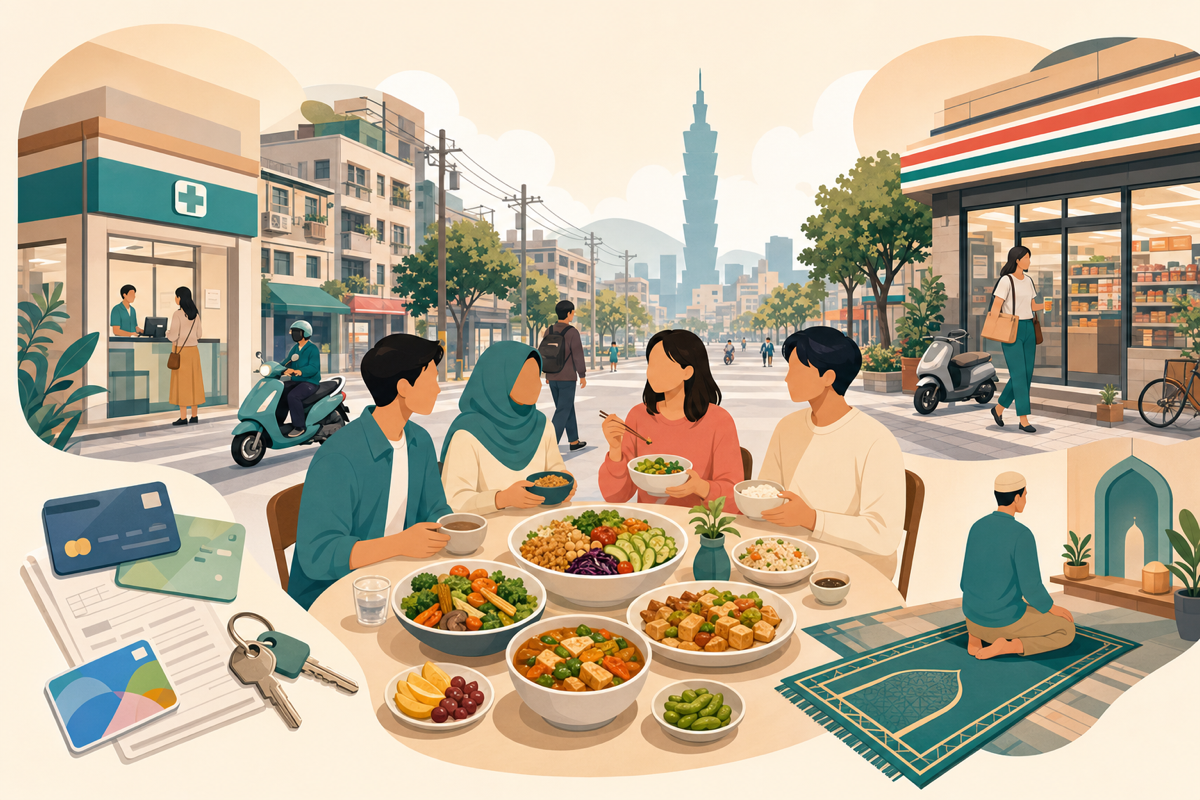
7. Seating arrangements have hierarchical distinctions.
There are seating rules for business entertainment and company dinners:
- The head seat : The seat directly opposite the entrance of the private room, reserved for the most important superiors, elders, and clients.
- Accompanying seats : those on either side of the main seat, for the less important person.
- Last seat : The seat closest to the entrance, usually occupied by juniors, newcomers, or those who greet guests.
Recommendation: Newcomers who are unsure of their seating arrangement should stand for now and wait for their supervisor/senior to be seated before following their hand gestures to take their seat. This is the safest approach.
8. Do not stick chopsticks straight into the rice bowl.
Sticking chopsticks upright in rice is a way of offering sacrifices to ancestors or the deceased . Taiwanese people would feel immediately uncomfortable seeing this.
Also, please avoid:
- Pointing at someone with chopsticks while speaking
- Tapping a bowl with chopsticks (a begging gesture)
- Use your own chopsticks to pick up food directly from the shared plate (or use serving chopsticks or flip the food over).
Titles and word choice (2 Lei)

9. Do not address elders or superiors by their first names.
In Taiwan, both workplaces and families place great importance on titles and forms of address.
| object | call | avoid |
|---|---|---|
| manager | Manager X / General Manager X / Director X | Address people by their full names (e.g., "Zhiming"). |
| senior | Brother X/Sister X | Address people by their first name (unless the other person specifically requests it). |
| elders, clients | Teacher X / Mr. X / Ms. X | Address them by their full name or in English (unless they have an English business card). |
Recommendation: When you first start working, observe how your colleagues address each other and then use their names.
10. Remain neutral on political topics.
Taiwan is a democratic society with a high degree of freedom of speech, but workplace advice still includes:
- Do not proactively discuss cross-strait relations, elections, or political parties.
- When a client or colleague brings it up, listen without commenting ("I'm not very familiar with this topic").
- Using "Taiwan" when referring to a country makes interacting with locals feel most natural.
This is not about suppressing your thoughts, but about avoiding unnecessary disputes in business settings and protecting your working relationships.
Religion and Folklore (2 Lei)
11. Taboos of the 7th month of the lunar calendar (Ghost Month)
The seventh month of the lunar calendar (approximately August in the Gregorian calendar) is Taiwan's "Ghost Month," and older colleagues/clients will avoid it.
- Moving, getting married, buying a car, buying a house
- Groundbreaking, opening ceremony, signing of major contracts
- Hanging clothes out to dry at night (legend has it that they will be "borrowed" to wear)
- Whistling at night, patting on the shoulder
Even if you don't believe it, I suggest : try to avoid signing contracts or holding events during Ghost Month, or confirm with the client beforehand whether they mind.
12. Do not take photos indiscriminately at worship sites.
Entering temples, funeral sites, and ancestral halls/shrine areas in homes:
- No flash
- Do not take photos in front of statues of gods, Buddhas, portraits of the deceased, or memorial tablets (unless the person explicitly consents).
- Do not make loud noises or point at the idols.
- Women should not enter the main shrine during their menstrual period (this custom exists in some temples, where they may stay in the outer shrine).
If you're just passing through and sightseeing, it's safest to observe what others are doing and follow suit.
Core principle: Ask if you're unsure.
These 12 taboos aren't meant to be memorized, but rather to let you know "what Taiwanese people care about." Most colleagues, supervisors, and clients are actually very willing to explain the origins of these traditions, as long as you're willing to ask.
What truly offends people is "deliberately violating the rules" or "ignoring warnings even after being reminded ." Attitude is more important than knowledge.
When faced with uncertain occasions (weddings, funerals, celebrations, Lunar New Year, temple visits), it's much safer to ask your Taiwanese colleagues or HR than to guess.
Frequently Asked Questions (Q&A)
Q1: I accidentally gave a clock or umbrella to a colleague/client. What should I do now?
Don't be too nervous. Most Taiwanese people know that foreigners are the ones who don't understand this custom. Honestly saying, "I just learned this, I'm sorry, I'll pay attention next time," will make the other person feel that you are thoughtful. If the other person is an elder who cares more about folk customs, you can give them a small auspicious gift (tea or candy) as a way to appease them.
Q2: Is it really true that you can't sign contracts during the Ghost Month in the lunar calendar?
There are no mandatory regulations, but some Taiwanese homeowners or elders do care. The safest approach is to first ask the other party , "Do you have any special considerations regarding signing a contract in the seventh month of the lunar calendar?" Let them decide for themselves, rather than you unilaterally pushing them.
Q3: My Taiwanese colleague gave me a red envelope during Chinese New Year. Do I need to give one back?
Only married individuals or those with children are required to give red envelopes to younger relatives; unmarried newcomers are the recipients and do not need to reciprocate, simply expressing their gratitude ("Thank you, Happy New Year!"). If you are unsure of your status, observe how other foreign colleagues handle it, or directly ask HR.
Q4: I am not from Taiwan, can I go into the temple to pray together?
Yes, you can. Temples in Taiwan generally welcome visitors of any religious background, and staff will not proactively inquire about your beliefs. As long as you observe the rules against taking photos, remain quiet, and do not step over the offering table , you will not offend anyone. If a colleague invites you to pray together, just follow along; you don't need to specifically state your own beliefs.
Q5: What should I do if I don't know where to sit during a dinner party?
Waiting is the safest strategy. Newcomers should stand near the entrance and wait for their supervisor or senior colleague to be seated before taking their seat according to their gestures or instructions. If no one guides you, sitting near the entrance is usually a safe bet (leave the last seat for yourself).
Q6: I accidentally called my supervisor by his first name. He didn't say anything, but the atmosphere felt a bit strange. Should I try to fix this?
You can naturally use the correct title in the next interaction ("Manager X, about that report...") without having to apologize, so as not to escalate a small matter. Most supervisors will forgive a mistake once , but repeatedly using the wrong title will make the other person feel uncomfortable.
Further Reading
- Taiwanese Workplace Communication Skills: 10 Things Foreign Talents Must Know —Learn More About "How to Do It" in the Workplace
- What do Taiwanese companies value? Resume writing and interview strategies for foreign professionals —job hunting preparation before starting work.
Ready? Find the right job at New Southbound Job Bank and start your career in Taiwan!




Enter your email and we will reset your password.
Verification email has been sent to your inbox
Please check your email and follow the instructions


Please log in to get started
The verification code has been sent to your email inbox.
Please check your email and enter the code in the field.